new

Get trending papers in your email inbox!

Subscribe

Daily Papers

byAK and the research community

Jul 17

Fine-tuning deep learning model parameters for improved super-resolution of dynamic MRI with prior-knowledge

Dynamic imaging is a beneficial tool for interventions to assess physiological changes. Nonetheless during dynamic MRI, while achieving a high temporal resolution, the spatial resolution is compromised. To overcome this spatio-temporal trade-off, this research presents a super-resolution (SR) MRI reconstruction with prior knowledge based fine-tuning to maximise spatial information while reducing the required scan-time for dynamic MRIs. An U-Net based network with perceptual loss is trained on a benchmark dataset and fine-tuned using one subject-specific static high resolution MRI as prior knowledge to obtain high resolution dynamic images during the inference stage. 3D dynamic data for three subjects were acquired with different parameters to test the generalisation capabilities of the network. The method was tested for different levels of in-plane undersampling for dynamic MRI. The reconstructed dynamic SR results after fine-tuning showed higher similarity with the high resolution ground-truth, while quantitatively achieving statistically significant improvement. The average SSIM of the lowest resolution experimented during this research (6.25~\% of the k-space) before and after fine-tuning were 0.939 pm 0.008 and 0.957 pm 0.006 respectively. This could theoretically result in an acceleration factor of 16, which can potentially be acquired in less than half a second. The proposed approach shows that the super-resolution MRI reconstruction with prior-information can alleviate the spatio-temporal trade-off in dynamic MRI, even for high acceleration factors.

  • 6 authors
·
Feb 4, 2021

Adaptive Slicing-Assisted Hyper Inference for Enhanced Small Object Detection in High-Resolution Imagery

Deep learning-based object detectors have achieved remarkable success across numerous computer vision applications, yet they continue to struggle with small object detection in high-resolution aerial and satellite imagery, where dense object distributions, variable shooting angles, diminutive target sizes, and substantial inter-class variability pose formidable challenges. Existing slicing strategies that partition high-resolution images into manageable patches have demonstrated promising results for enlarging the effective receptive field of small targets; however, their reliance on fixed slice dimensions introduces significant redundant computation, inflating inference cost and undermining detection speed. In this paper, we propose Adaptive Slicing-Assisted Hyper Inference (ASAHI), a novel slicing framework that shifts the paradigm from prescribing a fixed slice size to adaptively determining the optimal number of slices according to image resolution, thereby substantially mitigating redundant computation while preserving beneficial overlap between adjacent patches. ASAHI integrates three synergistic components: (1)an adaptive resolution-aware slicing algorithm that dynamically generates 6 or 12 overlapping patches based on a learned threshold, (2)a slicing-assisted fine-tuning (SAF) strategy that constructs augmented training data comprising both full-resolution and sliced image patches, and (3)a Cluster-DIoU-NMS (CDN) post-processing module that combines the geometric merging efficiency of Cluster-NMS with the center-distance-aware suppression of DIoU-NMS to achieve robust duplicate elimination in crowded scenes. Extensive experiments on VisDrone2019 and xView, demonstrate that ASAHI achieves state-of-the-art performance with 56.8% on VisDrone2019-DET-val and 22.7% on xView-test, while reducing inference time by 20-25% compared to the baseline SAHI method.

  • 3 authors
·
Apr 20

CineScale: Free Lunch in High-Resolution Cinematic Visual Generation

Visual diffusion models achieve remarkable progress, yet they are typically trained at limited resolutions due to the lack of high-resolution data and constrained computation resources, hampering their ability to generate high-fidelity images or videos at higher resolutions. Recent efforts have explored tuning-free strategies to exhibit the untapped potential higher-resolution visual generation of pre-trained models. However, these methods are still prone to producing low-quality visual content with repetitive patterns. The key obstacle lies in the inevitable increase in high-frequency information when the model generates visual content exceeding its training resolution, leading to undesirable repetitive patterns deriving from the accumulated errors. In this work, we propose CineScale, a novel inference paradigm to enable higher-resolution visual generation. To tackle the various issues introduced by the two types of video generation architectures, we propose dedicated variants tailored to each. Unlike existing baseline methods that are confined to high-resolution T2I and T2V generation, CineScale broadens the scope by enabling high-resolution I2V and V2V synthesis, built atop state-of-the-art open-source video generation frameworks. Extensive experiments validate the superiority of our paradigm in extending the capabilities of higher-resolution visual generation for both image and video models. Remarkably, our approach enables 8k image generation without any fine-tuning, and achieves 4k video generation with only minimal LoRA fine-tuning. Generated video samples are available at our website: https://eyeline-labs.github.io/CineScale/.

  • 5 authors
·
Aug 21, 2025 2

Distillation-Supervised Convolutional Low-Rank Adaptation for Efficient Image Super-Resolution

Convolutional neural networks (CNNs) have been widely used in efficient image super-resolution. However, for CNN-based methods, performance gains often require deeper networks and larger feature maps, which increase complexity and inference costs. Inspired by LoRA's success in fine-tuning large language models, we explore its application to lightweight models and propose Distillation-Supervised Convolutional Low-Rank Adaptation (DSCLoRA), which improves model performance without increasing architectural complexity or inference costs. Specifically, we integrate ConvLoRA into the efficient SR network SPAN by replacing the SPAB module with the proposed SConvLB module and incorporating ConvLoRA layers into both the pixel shuffle block and its preceding convolutional layer. DSCLoRA leverages low-rank decomposition for parameter updates and employs a spatial feature affinity-based knowledge distillation strategy to transfer second-order statistical information from teacher models (pre-trained SPAN) to student models (ours). This method preserves the core knowledge of lightweight models and facilitates optimal solution discovery under certain conditions. Experiments on benchmark datasets show that DSCLoRA improves PSNR and SSIM over SPAN while maintaining its efficiency and competitive image quality. Notably, DSCLoRA ranked first in the Overall Performance Track of the NTIRE 2025 Efficient Super-Resolution Challenge. Our code and models are made publicly available at https://github.com/Yaozzz666/DSCF-SR.

  • 7 authors
·
Apr 15, 2025

Taming Real-World Space-Time Video Super-Resolution with One-Step Diffusion

Diffusion models have demonstrated exceptional success in video super-resolution (VSR), exhibiting powerful capabilities for generating fine-grained details. However, their potential for space-time video super-resolution (STVSR), which necessitates not only recovering realistic high-resolution visual content but also improving the frame rate with coherent temporal dynamics, remains largely underexplored. Moreover, existing STVSR methods predominantly address spatiotemporal upsampling under simple degradation assumptions, thus failing in real-world scenarios with complex unknown degradations. To address these challenges, we propose OSDEnhancer, the first framework that achieves robust STVSR in one-step diffusion. OSDEnhancer begins with a linear initialization to establish essential spatiotemporal structures and adapt the model for one-step reconstruction. It then applies a divide-and-conquer strategy, introducing the temporal coherence (TC) and texture enrichment (TE) LoRAs that progressively specialize in inter-frame dynamics modeling and fine-grained texture recovery, respectively, while collaborating during inference for enhanced overall performance. A bidirectional VAE decoder employs deformable recurrent blocks to leverage the multi-scale structure of the vanilla VAE, enhancing latent-to-pixel reconstruction through joint multi-scale deformable aggregation and inter-frame feature propagation. Experimental results demonstrate that the proposed method attains state-of-the-art performance with superior generalization in real-world scenarios. The code is available at https://github.com/W-Shuoyan/OSDEnhancer.

  • 6 authors
·
May 18

SAM-DiffSR: Structure-Modulated Diffusion Model for Image Super-Resolution

Diffusion-based super-resolution (SR) models have recently garnered significant attention due to their potent restoration capabilities. But conventional diffusion models perform noise sampling from a single distribution, constraining their ability to handle real-world scenes and complex textures across semantic regions. With the success of segment anything model (SAM), generating sufficiently fine-grained region masks can enhance the detail recovery of diffusion-based SR model. However, directly integrating SAM into SR models will result in much higher computational cost. In this paper, we propose the SAM-DiffSR model, which can utilize the fine-grained structure information from SAM in the process of sampling noise to improve the image quality without additional computational cost during inference. In the process of training, we encode structural position information into the segmentation mask from SAM. Then the encoded mask is integrated into the forward diffusion process by modulating it to the sampled noise. This adjustment allows us to independently adapt the noise mean within each corresponding segmentation area. The diffusion model is trained to estimate this modulated noise. Crucially, our proposed framework does NOT change the reverse diffusion process and does NOT require SAM at inference. Experimental results demonstrate the effectiveness of our proposed method, showcasing superior performance in suppressing artifacts, and surpassing existing diffusion-based methods by 0.74 dB at the maximum in terms of PSNR on DIV2K dataset. The code and dataset are available at https://github.com/lose4578/SAM-DiffSR.

  • 7 authors
·
Feb 26, 2024 1

UAV-VL-R1: Generalizing Vision-Language Models via Supervised Fine-Tuning and Multi-Stage GRPO for UAV Visual Reasoning

Recent advances in vision-language models (VLMs) have demonstrated strong generalization in natural image tasks. However, their performance often degrades on unmanned aerial vehicle (UAV)-based aerial imagery, which features high resolution, complex spatial semantics, and strict real-time constraints. These challenges limit the applicability of general-purpose VLMs to structured aerial reasoning tasks. To address these challenges, we propose UAV-VL-R1, a lightweight VLM explicitly designed for aerial visual reasoning. It is trained using a hybrid method that combines supervised fine-tuning (SFT) and multi-stage reinforcement learning (RL). We leverage the group relative policy optimization (GRPO) algorithm to promote structured and interpretable reasoning through rule-guided rewards and intra-group policy alignment. To support model training and evaluation, we introduce a high-resolution visual question answering dataset named HRVQA-VL, which consists of 50,019 annotated samples covering eight UAV-relevant reasoning tasks, including object counting, transportation recognition, and spatial scene inference. Experimental results show that UAV-VL-R1 achieves a 48.17% higher zero-shot accuracy than the Qwen2-VL-2B-Instruct baseline and even outperforms its 72B-scale variant, which is 36x larger, on multiple tasks. Ablation studies reveal that while SFT improves semantic alignment, it may reduce reasoning diversity in mathematical tasks. GRPO-based RL compensates for this limitation by enhancing logical flexibility and the robustness of inference. Additionally, UAV-VL-R1 requires only 3.9GB of memory under FP16 inference and can be quantized to 2.5GB with INT8, supporting real-time deployment on resource-constrained UAV platforms.

  • 6 authors
·
Aug 15, 2025

CanViT: Toward Active-Vision Foundation Models

Active computer vision promises efficient, biologically plausible perception through sequential, localized glimpses, but lacks scalable general-purpose architectures and pretraining pipelines. As a result, Active-Vision Foundation Models (AVFMs) have remained unexplored. We introduce CanViT, the first task- and policy-agnostic AVFM. CanViT uses scene-relative RoPE to bind a retinotopic Vision Transformer backbone and a spatiotopic scene-wide latent workspace, the canvas. Efficient interaction with this high-capacity working memory is supported by Canvas Attention, a novel asymmetric cross-attention mechanism. We decouple thinking (backbone-level) and memory (canvas-level), eliminating canvas-side self-attention and fully-connected layers to achieve low-latency sequential inference and scalability to large scenes. We propose a label-free active vision pretraining scheme, policy-agnostic passive-to-active dense latent distillation: reconstructing scene-wide DINOv3 embeddings from sequences of low-resolution glimpses with randomized locations, zoom levels, and lengths. We pretrain CanViT-B from a random initialization on 13.2 million ImageNet-21k scenes -- an order of magnitude more than previous active models -- and 1 billion random glimpses, in 166 hours on a single H100. On ADE20K segmentation, a frozen CanViT-B achieves 38.5% mIoU in a single low-resolution glimpse, outperforming the best active model's 27.6% with 19.5x fewer inference FLOPs and no fine-tuning, as well as its FLOP- or input-matched DINOv3 teacher. Given additional glimpses, CanViT-B reaches 45.9% ADE20K mIoU. On ImageNet-1k classification, CanViT-B reaches 81.2% top-1 accuracy with frozen teacher probes. CanViT generalizes to longer rollouts, larger scenes, and new policies. Our work closes the wide gap between passive and active vision on semantic segmentation and demonstrates the potential of AVFMs as a new research axis.

canvit CanViT
·
Mar 23 2

High-Precision Dichotomous Image Segmentation via Probing Diffusion Capacity

In the realm of high-resolution (HR), fine-grained image segmentation, the primary challenge is balancing broad contextual awareness with the precision required for detailed object delineation, capturing intricate details and the finest edges of objects. Diffusion models, trained on vast datasets comprising billions of image-text pairs, such as SD V2.1, have revolutionized text-to-image synthesis by delivering exceptional quality, fine detail resolution, and strong contextual awareness, making them an attractive solution for high-resolution image segmentation. To this end, we propose DiffDIS, a diffusion-driven segmentation model that taps into the potential of the pre-trained U-Net within diffusion models, specifically designed for high-resolution, fine-grained object segmentation. By leveraging the robust generalization capabilities and rich, versatile image representation prior of the SD models, coupled with a task-specific stable one-step denoising approach, we significantly reduce the inference time while preserving high-fidelity, detailed generation. Additionally, we introduce an auxiliary edge generation task to not only enhance the preservation of fine details of the object boundaries, but reconcile the probabilistic nature of diffusion with the deterministic demands of segmentation. With these refined strategies in place, DiffDIS serves as a rapid object mask generation model, specifically optimized for generating detailed binary maps at high resolutions, while demonstrating impressive accuracy and swift processing. Experiments on the DIS5K dataset demonstrate the superiority of DiffDIS, achieving state-of-the-art results through a streamlined inference process. The source code will be publicly available at https://github.com/qianyu-dlut/DiffDIS.

  • 7 authors
·
Oct 13, 2024

POINTS-GUI-G: GUI-Grounding Journey

The rapid advancement of vision-language models has catalyzed the emergence of GUI agents, which hold immense potential for automating complex tasks, from online shopping to flight booking, thereby alleviating the burden of repetitive digital workflows. As a foundational capability, GUI grounding is typically established as a prerequisite for end-to-end task execution. It enables models to precisely locate interface elements, such as text and icons, to perform accurate operations like clicking and typing. Unlike prior works that fine-tune models already possessing strong spatial awareness (e.g., Qwen3-VL), we aim to master the full technical pipeline by starting from a base model with minimal grounding ability, such as POINTS-1.5. We introduce POINTS-GUI-G-8B, which achieves state-of-the-art performance with scores of 59.9 on ScreenSpot-Pro, 66.0 on OSWorld-G, 95.7 on ScreenSpot-v2, and 49.9 on UI-Vision. Our model's success is driven by three key factors: (1) Refined Data Engineering, involving the unification of diverse open-source datasets format alongside sophisticated strategies for augmentation, filtering, and difficulty grading; (2) Improved Training Strategies, including continuous fine-tuning of the vision encoder to enhance perceptual accuracy and maintaining resolution consistency between training and inference; and (3) Reinforcement Learning (RL) with Verifiable Rewards. While RL is traditionally used to bolster reasoning, we demonstrate that it significantly improves precision in the perception-intensive GUI grounding task. Furthermore, GUI grounding provides a natural advantage for RL, as rewards are easily verifiable and highly accurate.

  • 10 authors
·
Feb 6 1

The Foundation Cracks: A Comprehensive Study on Bugs and Testing Practices in LLM Libraries

Large Language Model (LLM) libraries have emerged as the foundational infrastructure powering today's AI revolution, serving as the backbone for LLM deployment, inference optimization, fine-tuning, and production serving across diverse applications. Despite their critical role in the LLM ecosystem, these libraries face frequent quality issues and bugs that threaten the reliability of AI systems built upon them. To address this knowledge gap, we present the first comprehensive empirical investigation into bug characteristics and testing practices in modern LLM libraries. We examine 313 bug-fixing commits extracted across two widely-adopted LLM libraries: HuggingFace Transformers and vLLM.Through rigorous manual analysis, we establish comprehensive taxonomies categorizing bug symptoms into 5 types and root causes into 14 distinct categories.Our primary discovery shows that API misuse has emerged as the predominant root cause (32.17%-48.19%), representing a notable transition from algorithm-focused defects in conventional deep learning frameworks toward interface-oriented problems. Additionally, we examine 7,748 test functions to identify 7 distinct test oracle categories employed in current testing approaches, with predefined expected outputs (such as specific tensors and text strings) being the most common strategy. Our assessment of existing testing effectiveness demonstrates that the majority of bugs escape detection due to inadequate test cases (41.73%), lack of test drivers (32.37%), and weak test oracles (25.90%). Drawing from these findings, we offer some recommendations for enhancing LLM library quality assurance.

  • 7 authors
·
Jun 13, 2025

ERGO: Efficient High-Resolution Visual Understanding for Vision-Language Models

Efficient processing of high-resolution images is crucial for real-world vision-language applications. However, existing Large Vision-Language Models (LVLMs) incur substantial computational overhead due to the large number of vision tokens. With the advent of "thinking with images" models, reasoning now extends beyond text to the visual domain. This capability motivates our two-stage "coarse-to-fine" reasoning pipeline: first, a downsampled image is analyzed to identify task-relevant regions; then, only these regions are cropped at full resolution and processed in a subsequent reasoning stage. This approach reduces computational cost while preserving fine-grained visual details where necessary. A major challenge lies in inferring which regions are truly relevant to a given query. Recent related methods often fail in the first stage after input-image downsampling, due to perception-driven reasoning, where clear visual information is required for effective reasoning. To address this issue, we propose ERGO (Efficient Reasoning & Guided Observation) that performs reasoning-driven perception-leveraging multimodal context to determine where to focus. Our model can account for perceptual uncertainty, expanding the cropped region to cover visually ambiguous areas for answering questions. To this end, we develop simple yet effective reward components in a reinforcement learning framework for coarse-to-fine perception. Across multiple datasets, our approach delivers higher accuracy than the original model and competitive methods, with greater efficiency. For instance, ERGO surpasses Qwen2.5-VL-7B on the V* benchmark by 4.7 points while using only 23% of the vision tokens, achieving a 3x inference speedup. The code and models can be found at: https://github.com/nota-github/ERGO.

  • 8 authors
·
Sep 26, 2025 2

LOVE-R1: Advancing Long Video Understanding with an Adaptive Zoom-in Mechanism via Multi-Step Reasoning

Long video understanding is still challenging for recent Large Video-Language Models (LVLMs) due to the conflict between long-form temporal understanding and detailed spatial perception. LVLMs with a uniform frame sampling mechanism, which samples frames with an equal frame size and fixed sampling rate, inevitably sacrifice either temporal clues or spatial details, resulting in suboptimal solutions. To mitigate this dilemma, we propose LOVE-R1, a model that can adaptively zoom in on a video clip. The model is first provided with densely sampled frames but in a small resolution. If some spatial details are needed, the model can zoom in on a clip of interest with a large frame resolution based on its reasoning until key visual information is obtained. The whole process is implemented as a multi-step reasoning process. To train the reasoning ability, we first finetune the model on our collected 38k high-quality CoT data and enhance it with decoupled reinforcement finetuning. As outcome rewards can not provide fine-grained process supervision, we decouple multi-step reasoning into multiple single-step reasoning and optimize the internal zoom-in ability explicitly. Experiments on long video understanding benchmarks show that our model with the slow-fast adaptive frame sampling mechanism achieves a great trade-off between sampling density and frame resolutions, and LOVE-R1 outperforms our baseline Qwen2.5-VL by an average of 3.1% points across 4 common long video understanding benchmarks.

AlibabaTongyiLab TongyiLab
·
Sep 29, 2025 2

Q-Zoom: Query-Aware Adaptive Perception for Efficient Multimodal Large Language Models

MLLMs require high-resolution visual inputs for fine-grained tasks like document understanding and dense scene perception. However, current global resolution scaling paradigms indiscriminately flood the quadratic self-attention mechanism with visually redundant tokens, severely bottlenecking inference throughput while ignoring spatial sparsity and query intent. To overcome this, we propose Q-Zoom, a query-aware adaptive high-resolution perception framework that operates in an efficient coarse-to-fine manner. First, a lightweight Dynamic Gating Network safely bypasses high-resolution processing when coarse global features suffice. Second, for queries demanding fine-grained perception, a Self-Distilled Region Proposal Network (SD-RPN) precisely localizes the task-relevant Region-of-Interest (RoI) directly from intermediate feature spaces. To optimize these modules efficiently, the gating network uses a consistency-aware generation strategy to derive deterministic routing labels, while the SD-RPN employs a fully self-supervised distillation paradigm. A continuous spatio-temporal alignment scheme and targeted fine-tuning then seamlessly fuse the dense local RoI with the coarse global layout. Extensive experiments demonstrate that Q-Zoom establishes a dominant Pareto frontier. Using Qwen2.5-VL-7B as a primary testbed, Q-Zoom accelerates inference by 2.52 times on Document & OCR benchmarks and 4.39 times in High-Resolution scenarios while matching the baseline's peak accuracy. Furthermore, when configured for maximum perceptual fidelity, Q-Zoom surpasses the baseline's peak performance by 1.1% and 8.1% on these respective benchmarks. These robust improvements transfer seamlessly to Qwen3-VL, LLaVA, and emerging RL-based thinking-with-image models. Project page is available at https://yuhengsss.github.io/Q-Zoom/.

  • 5 authors
·
Apr 7 3

Concept-Guided Fine-Tuning: Steering ViTs away from Spurious Correlations to Improve Robustness

Vision Transformers (ViTs) often degrade under distribution shifts because they rely on spurious correlations, such as background cues, rather than semantically meaningful features. Existing regularization methods, typically relying on simple foreground-background masks, which fail to capture the fine-grained semantic concepts that define an object (e.g., ``long beak'' and ``wings'' for a ``bird''). As a result, these methods provide limited robustness to distribution shifts. To address this limitation, we introduce a novel finetuning framework that steers model reasoning toward concept-level semantics. Our approach optimizes the model's internal relevance maps to align with spatially grounded concept masks. These masks are generated automatically, without manual annotation: class-relevant concepts are first proposed using an LLM-based, label-free method, and then segmented using a VLM. The finetuning objective aligns relevance with these concept regions while simultaneously suppressing focus on spurious background areas. Notably, this process requires only a minimal set of images and uses half of the dataset classes. Extensive experiments on five out-of-distribution benchmarks demonstrate that our method improves robustness across multiple ViT-based models. Furthermore, we show that the resulting relevance maps exhibit stronger alignment with semantic object parts, offering a scalable path toward more robust and interpretable vision models. Finally, we confirm that concept-guided masks provide more effective supervision for model robustness than conventional segmentation maps, supporting our central hypothesis.

  • 3 authors
·
Mar 9 2

Beyond LLaVA-HD: Diving into High-Resolution Large Multimodal Models

Seeing clearly with high resolution is a foundation of Large Multimodal Models (LMMs), which has been proven to be vital for visual perception and reasoning. Existing works usually employ a straightforward resolution upscaling method, where the image consists of global and local branches, with the latter being the sliced image patches but resized to the same resolution as the former. This means that higher resolution requires more local patches, resulting in exorbitant computational expenses, and meanwhile, the dominance of local image tokens may diminish the global context. In this paper, we dive into the problems and propose a new framework as well as an elaborate optimization strategy. Specifically, we extract contextual information from the global view using a mixture of adapters, based on the observation that different adapters excel at different tasks. With regard to local patches, learnable query embeddings are introduced to reduce image tokens, the most important tokens accounting for the user question will be further selected by a similarity-based selector. Our empirical results demonstrate a `less is more' pattern, where utilizing fewer but more informative local image tokens leads to improved performance. Besides, a significant challenge lies in the training strategy, as simultaneous end-to-end training of the global mining block and local compression block does not yield optimal results. We thus advocate for an alternating training way, ensuring balanced learning between global and local aspects. Finally, we also introduce a challenging dataset with high requirements for image detail, enhancing the training of the local compression layer. The proposed method, termed LMM with Sophisticated Tasks, Local image compression, and Mixture of global Experts (SliME), achieves leading performance across various benchmarks with only 2 million training data.

  • 7 authors
·
Jun 12, 2024 2

Perceive-to-Reason: Decoupling Perception and Reasoning for Fine-Grained Visual Reasoning

Fine-grained visual reasoning remains challenging for vision-language models, especially when small but critical visual cues are buried in high-resolution images. Existing approaches rely on repeated cropping or test-time visual search to introduce local evidence, but they typically do not explicitly distinguish perception from reasoning. In this paper, we propose Perceive-to-Reason (P2R), a unified framework that formulates fine-grained visual reasoning as a two-stage process: the model first localizes question-relevant evidence as a Perceiver, and then answers the question as a Reasoner based on the annotated image and cropped regions. To better align training with this decoupled formulation, we further introduce Perception-Reasoning Alternating GRPO (PRA-GRPO), a role-aware reinforcement learning strategy that alternates between perception-focused and reasoning-focused updates using only final-answer supervision. Built on top of Qwen3-VL-Instruct-2B/4B/8B, P2R consistently improves performance across model scales. In particular, P2R-4B achieves 93.2% on V-Star, 81.9% on HR-Bench-4K, and 80.5% on HR-Bench-8K, substantially outperforming its corresponding backbone. Further experiments show that the benefits of P2R extend beyond high-resolution benchmarks to broader multimodal reasoning tasks. These results suggest that explicitly decoupling perception from reasoning provides an effective framework for fine-grained visual reasoning.

Dragonfly: Multi-Resolution Zoom Supercharges Large Visual-Language Model

Recent advances in large multimodal models (LMMs) suggest that higher image resolution enhances the fine-grained understanding of image details, crucial for tasks such as visual commonsense reasoning and analyzing biomedical images. However, increasing input resolution poses two main challenges: 1) It extends the context length required by the language model, leading to inefficiencies and hitting the model's context limit; 2) It increases the complexity of visual features, necessitating more training data or more complex architecture. We introduce Dragonfly, a new LMM architecture that enhances fine-grained visual understanding and reasoning about image regions to address these challenges. Dragonfly employs two key strategies: multi-resolution visual encoding and zoom-in patch selection. These strategies allow the model to process high-resolution images efficiently while maintaining reasonable context length. Our experiments on eight popular benchmarks demonstrate that Dragonfly achieves competitive or better performance compared to other architectures, highlighting the effectiveness of our design. Additionally, we finetuned Dragonfly on biomedical instructions, achieving state-of-the-art results on multiple biomedical tasks requiring fine-grained visual understanding, including 92.3% accuracy on the Path-VQA dataset (compared to 83.3% for Med-Gemini) and the highest reported results on biomedical image captioning. To support model training, we curated a visual instruction-tuning dataset with 5.5 million image-instruction samples in the general domain and 1.4 million samples in the biomedical domain. We also conducted ablation studies to characterize the impact of various architectural designs and image resolutions, providing insights for future research on visual instruction alignment. The codebase and model are available at https://github.com/togethercomputer/Dragonfly.

  • 6 authors
·
Jun 3, 2024

DiffuseHigh: Training-free Progressive High-Resolution Image Synthesis through Structure Guidance

Recent surge in large-scale generative models has spurred the development of vast fields in computer vision. In particular, text-to-image diffusion models have garnered widespread adoption across diverse domain due to their potential for high-fidelity image generation. Nonetheless, existing large-scale diffusion models are confined to generate images of up to 1K resolution, which is far from meeting the demands of contemporary commercial applications. Directly sampling higher-resolution images often yields results marred by artifacts such as object repetition and distorted shapes. Addressing the aforementioned issues typically necessitates training or fine-tuning models on higher resolution datasets. However, this undertaking poses a formidable challenge due to the difficulty in collecting large-scale high-resolution contents and substantial computational resources. While several preceding works have proposed alternatives, they often fail to produce convincing results. In this work, we probe the generative ability of diffusion models at higher resolution beyond its original capability and propose a novel progressive approach that fully utilizes generated low-resolution image to guide the generation of higher resolution image. Our method obviates the need for additional training or fine-tuning which significantly lowers the burden of computational costs. Extensive experiments and results validate the efficiency and efficacy of our method. Project page: https://yhyun225.github.io/DiffuseHigh/

  • 4 authors
·
Jun 26, 2024

CorDA: Context-Oriented Decomposition Adaptation of Large Language Models

Current parameter-efficient fine-tuning (PEFT) methods build adapters without considering the context of downstream task to learn, or the context of important knowledge to maintain. As a result, there is often a performance gap compared to full-parameter finetuning, and meanwhile the finetuned model suffers from catastrophic forgetting of the pre-trained world knowledge. In this paper, we propose CorDA, a Context-oriented Decomposition Adaptation method that builds learnable adapters from weight decomposition oriented by the context of downstream task or world knowledge. Concretely, we collect a few data samples, and perform singular value decomposition for each linear layer of a pre-trained LLM multiplied by the covariance matrix of the input activation using these samples. By doing so, the context of the representative samples is captured through deciding the factorizing orientation. Our method enables two options, the knowledge-preserved adaptation and the instruction-previewed adaptation. For the former, we use question-answering samples to obtain the covariance matrices, and use the decomposed components with the smallest r singular values to initialize a learnable adapter, with the others frozen such that the world knowledge is better preserved. For the latter, we use the instruction data from the finetuning task, such as math or coding, to orientate the decomposition and train the largest r components that capture the main characteristics of the task to learn. We conduct extensive experiments on Math, Code, and Instruction Following tasks. Our knowledge-preserved adaptation not only achieves better performance than LoRA on finetuning tasks, but also mitigates the forgetting of world knowledge. Our instruction-previewed adaptation is able to further enhance the finetuning performance, surpassing full-parameter finetuning and the state-of-the-art PEFT methods.

  • 7 authors
·
Jun 7, 2024

Composable Sparse Fine-Tuning for Cross-Lingual Transfer

Fine-tuning the entire set of parameters of a large pretrained model has become the mainstream approach for transfer learning. To increase its efficiency and prevent catastrophic forgetting and interference, techniques like adapters and sparse fine-tuning have been developed. Adapters are modular, as they can be combined to adapt a model towards different facets of knowledge (e.g., dedicated language and/or task adapters). Sparse fine-tuning is expressive, as it controls the behavior of all model components. In this work, we introduce a new fine-tuning method with both these desirable properties. In particular, we learn sparse, real-valued masks based on a simple variant of the Lottery Ticket Hypothesis. Task-specific masks are obtained from annotated data in a source language, and language-specific masks from masked language modeling in a target language. Both these masks can then be composed with the pretrained model. Unlike adapter-based fine-tuning, this method neither increases the number of parameters at inference time nor alters the original model architecture. Most importantly, it outperforms adapters in zero-shot cross-lingual transfer by a large margin in a series of multilingual benchmarks, including Universal Dependencies, MasakhaNER, and AmericasNLI. Based on an in-depth analysis, we additionally find that sparsity is crucial to prevent both 1) interference between the fine-tunings to be composed and 2) overfitting. We release the code and models at https://github.com/cambridgeltl/composable-sft.

  • 4 authors
·
Oct 14, 2021

LR0.FM: Low-Res Benchmark and Improving Robustness for Zero-Shot Classification in Foundation Models

Visual-language foundation Models (FMs) exhibit remarkable zero-shot generalization across diverse tasks, largely attributed to extensive pre-training on largescale datasets. However, their robustness on low-resolution/pixelated (LR) images, a common challenge in real-world scenarios, remains underexplored. We introduce LR0.FM, a comprehensive benchmark evaluating the impact of low resolution on the zero-shot classification performance of 10 FM(s) across 66 backbones and 15 datasets. We propose a novel metric, Weighted Aggregated Robustness, to address the limitations of existing metrics and better evaluate model performance across resolutions and datasets. Our key findings show that: (i) model size positively correlates with robustness to resolution degradation, (ii) pre-training dataset quality is more important than its size, and (iii) fine-tuned and higher resolution models are less robust against LR. Our analysis further reveals that the model makes semantically reasonable predictions at LR, and the lack of fine-grained details in input adversely impacts the model's initial layers more than the deeper layers. We use these insights and introduce a simple strategy, LR-TK0, to enhance the robustness of models without compromising their pre-trained weights. We demonstrate the effectiveness of LR-TK0 for robustness against low-resolution across several datasets and its generalization capability across backbones and other approaches. Code is available at https://github.com/shyammarjit/LR0.FM

Mind the Generation Process: Fine-Grained Confidence Estimation During LLM Generation

While large language models (LLMs) have demonstrated remarkable performance across diverse tasks, they fundamentally lack self-awareness and frequently exhibit overconfidence, assigning high confidence scores to incorrect predictions. Accurate confidence estimation is therefore critical for enhancing the trustworthiness and reliability of LLM-generated outputs. However, existing approaches suffer from coarse-grained scoring mechanisms that fail to provide fine-grained, continuous confidence estimates throughout the generation process. To address these limitations, we introduce FineCE, a novel confidence estimation method that delivers accurate, fine-grained confidence scores during text generation. Specifically, we first develop a comprehensive pipeline for constructing training data that effectively captures the underlying probabilistic distribution of LLM responses, and then train a model to predict confidence scores for arbitrary text sequences in a supervised manner. Furthermore, we propose a Backward Confidence Integration (BCI) strategy that leverages information from the subsequent text to enhance confidence estimation for the current sequence during inference. We also introduce three strategies for identifying optimal positions to perform confidence estimation within the generation process. Extensive experiments on multiple benchmark datasets demonstrate that FineCE consistently outperforms existing classical confidence estimation methods. Our code and all baselines used in the paper are available on GitHub.

  • 11 authors
·
Aug 16, 2025 2

FiTv2: Scalable and Improved Flexible Vision Transformer for Diffusion Model

Nature is infinitely resolution-free. In the context of this reality, existing diffusion models, such as Diffusion Transformers, often face challenges when processing image resolutions outside of their trained domain. To address this limitation, we conceptualize images as sequences of tokens with dynamic sizes, rather than traditional methods that perceive images as fixed-resolution grids. This perspective enables a flexible training strategy that seamlessly accommodates various aspect ratios during both training and inference, thus promoting resolution generalization and eliminating biases introduced by image cropping. On this basis, we present the Flexible Vision Transformer (FiT), a transformer architecture specifically designed for generating images with unrestricted resolutions and aspect ratios. We further upgrade the FiT to FiTv2 with several innovative designs, includingthe Query-Key vector normalization, the AdaLN-LoRA module, a rectified flow scheduler, and a Logit-Normal sampler. Enhanced by a meticulously adjusted network structure, FiTv2 exhibits 2times convergence speed of FiT. When incorporating advanced training-free extrapolation techniques, FiTv2 demonstrates remarkable adaptability in both resolution extrapolation and diverse resolution generation. Additionally, our exploration of the scalability of the FiTv2 model reveals that larger models exhibit better computational efficiency. Furthermore, we introduce an efficient post-training strategy to adapt a pre-trained model for the high-resolution generation. Comprehensive experiments demonstrate the exceptional performance of FiTv2 across a broad range of resolutions. We have released all the codes and models at https://github.com/whlzy/FiT to promote the exploration of diffusion transformer models for arbitrary-resolution image generation.

  • 6 authors
·
Oct 17, 2024 3

FineBench: Benchmarking and Enhancing Vision-Language Models for Fine-grained Human Activity Understanding

Vision-Language Models (VLMs) have demonstrated remarkable capabilities in general video understanding, yet they often struggle with the fine-grained comprehension crucial for real-world applications requiring nuanced interpretation of human actions and interactions. While some recent human-centric benchmarks evaluate aspects of model behaviour such as fairness/ethics, emotion perception, and broader human-centric metrics, they do not combine long-form videos, very dense QA coverage, and frame-level spatial/temporal grounding at scale. To bridge this gap, we introduce FineBench, a human-centric video question answering (VQA) benchmark specifically designed to assess fine-grained understanding. FineBench comprises 199,420 multiple-choice QA pairs densely annotated across 64 long-form videos (15 minutes each), focusing on detailed person movement, person interaction, and object manipulation, including compositional actions. Our extensive evaluation reveals that while proprietary models like GPT-5 achieve respectable performance, current open-source VLMs significantly underperform, struggling particularly with spatial reasoning in multi-person scenes and distinguishing subtle differences in human movements and interactions. To address these identified weaknesses, we propose FineAgent, a modular framework that enhances VLMs by leveraging a Localizer and a Descriptor. Experiments show that FineAgent consistently improves the performance of various open VLMs on FineBench. FineBench provides a rigorous testbed for future research into fine-grained human-centric video understanding, while FineAgent offers a practical approach to enhance such reasoning in current VLMs. Project page and code at https://joslefaure.github.io/assets/html/finebench.html.

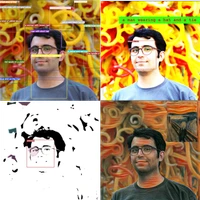
  • 5 authors
·
May 19

UltraVR: A Diagnostic Ultra-Resolution Image-VQA Benchmark for Evidence-Grounded Reasoning

Vision-language models (VLMs) excel on visual question answering and multimodal reasoning benchmarks. Yet their capability on ultra-resolution images - where critical evidence is tiny, subtle, spatially distant, or distributed - remains unclear. Existing evaluations largely report final-answer accuracy, offering limited insight into whether models acquire and integrate the necessary visual evidence. We introduce UltraVR, a diagnostic benchmark for evidence-grounded visual reasoning over ultra-resolution images. UltraVR spans four high-value scenarios: CCTV surveillance, remote sensing (RS), whole-slide image (WSI) pathology, and industrial anomaly detection (AD). These domains pose complementary challenges: fine-grained object grounding in crowded CCTV scenes, long-range spatial comparison in RS, multi-scale evidence navigation in WSI, and subtle irregularity detection in repetitive industrial layouts. Beyond standard QA triples, each instance includes a structured ground-truth chain of thought with step-level questions, intermediate answers, and reasoning labels. These labels decompose reasoning into evidence grounding, local perception, quantification, evidence integration, and decision inference, enabling process-level diagnosis over black-box scoring. Using UltraVR, we evaluate frontier VLMs and show that current models remain far from reliable on ultra-resolution reasoning. Importantly, the structured annotations allow us to localize failures across the visual-to-decision pipeline: errors concentrate in evidence grounding and local perception, while downstream inference often recovers when intermediate visual facts are supplied. These findings demonstrate UltraVR as a diagnostic testbed for measuring not only whether VLMs answer correctly, but where their ultra-resolution reasoning process breaks.

  • 9 authors
·
Jun 3

HallE-Switch: Rethinking and Controlling Object Existence Hallucinations in Large Vision Language Models for Detailed Caption

Current large vision-language models (LVLMs) achieve remarkable progress, yet there remains significant uncertainty regarding their ability to accurately apprehend visual details, that is, in performing detailed captioning. To address this, we introduce CCEval, a GPT-4 assisted evaluation method tailored for detailed captioning. Interestingly, while LVLMs demonstrate minimal object existence hallucination in existing VQA benchmarks, our proposed evaluation reveals continued susceptibility to such hallucinations. In this paper, we make the first attempt to investigate and attribute such hallucinations, including image resolution, the language decoder size, and instruction data amount, quality, granularity. Our findings underscore the unwarranted inference when the language description includes details at a finer object granularity than what the vision module can ground or verify, thus inducing hallucination. To control such hallucinations, we further attribute the reliability of captioning to contextual knowledge (involving only contextually grounded objects) and parametric knowledge (containing inferred objects by the model). Thus, we introduce HallE-Switch, a controllable LVLM in terms of Hallucination in object Existence. HallE-Switch can condition the captioning to shift between (i) exclusively depicting contextual knowledge for grounded objects and (ii) blending it with parametric knowledge to imagine inferred objects. Our method reduces hallucination by 44% compared to LLaVA_{7B} and maintains the same object coverage.

  • 10 authors
·
Oct 3, 2023

ResAdapter: Domain Consistent Resolution Adapter for Diffusion Models

Recent advancement in text-to-image models (e.g., Stable Diffusion) and corresponding personalized technologies (e.g., DreamBooth and LoRA) enables individuals to generate high-quality and imaginative images. However, they often suffer from limitations when generating images with resolutions outside of their trained domain. To overcome this limitation, we present the Resolution Adapter (ResAdapter), a domain-consistent adapter designed for diffusion models to generate images with unrestricted resolutions and aspect ratios. Unlike other multi-resolution generation methods that process images of static resolution with complex post-process operations, ResAdapter directly generates images with the dynamical resolution. Especially, after learning a deep understanding of pure resolution priors, ResAdapter trained on the general dataset, generates resolution-free images with personalized diffusion models while preserving their original style domain. Comprehensive experiments demonstrate that ResAdapter with only 0.5M can process images with flexible resolutions for arbitrary diffusion models. More extended experiments demonstrate that ResAdapter is compatible with other modules (e.g., ControlNet, IP-Adapter and LCM-LoRA) for image generation across a broad range of resolutions, and can be integrated into other multi-resolution model (e.g., ElasticDiffusion) for efficiently generating higher-resolution images. Project link is https://res-adapter.github.io

  • 10 authors
·
Mar 4, 2024 1

O1-Pruner: Length-Harmonizing Fine-Tuning for O1-Like Reasoning Pruning

Recently, long-thought reasoning LLMs, such as OpenAI's O1, adopt extended reasoning processes similar to how humans ponder over complex problems. This reasoning paradigm significantly enhances the model's problem-solving abilities and has achieved promising results. However, long-thought reasoning process leads to a substantial increase in inference time. A pressing challenge is reducing the inference overhead of long-thought LLMs while ensuring accuracy. In this paper, we experimentally demonstrate that long-thought reasoning models struggle to effectively allocate token budgets based on problem difficulty and reasoning redundancies. To address this, we propose Length-Harmonizing Fine-Tuning (O1-Pruner), aiming at minimizing reasoning overhead while maintaining accuracy. This effective fine-tuning method first estimates the LLM's baseline performance through pre-sampling and then uses RL-style fine-tuning to encourage the model to generate shorter reasoning processes under accuracy constraints. This allows the model to achieve efficient reasoning with lower redundancy while maintaining accuracy. Experiments on various mathematical reasoning benchmarks show that O1-Pruner not only significantly reduces inference overhead but also achieves higher accuracy, providing a novel and promising solution to this challenge. Our code is coming soon at https://github.com/StarDewXXX/O1-Pruner

  • 9 authors
·
Jan 21, 2025 2

LIFT the Veil for the Truth: Principal Weights Emerge after Rank Reduction for Reasoning-Focused Supervised Fine-Tuning

Recent studies have shown that supervised fine-tuning of LLMs on a small number of high-quality datasets can yield strong reasoning capabilities. However, full fine-tuning (Full FT), while powerful, is computationally expensive and susceptible to overfitting and catastrophic forgetting, particularly when data is limited. Sparse fine-tuning, which previously achieved notable success by updating only a small subset of model parameters, offers a promising trade-off between efficiency and effectiveness. Yet, it has lagged behind in the LLM era due to the difficulty of identifying parameters truly critical for reasoning. In this work, we state that weights with the largest magnitude after low-rank approximation are critical weights for fine-tuning, which we call Principal Weights. Surprisingly, while magnitude-based sparse fine-tuning performs poorly as a baseline on LLM fine-tuning, it becomes highly effective after rank reduction. These insights motivate our method: Low-rank Informed Sparse Fine-Tuning (LIFT). LIFT only updates the top 5% Principal Weights throughout training and consistently achieves better performance on reasoning tasks than Full FT, while maintaining memory efficiency on par with popular parameter-efficient fine-tuning methods. In addition to strong performance on target domains such as arithmetic reasoning, LIFT also retains up to 20% more source-domain knowledge, compared to Full FT and LoRA. Our code is available at: https://github.com/zihanghliu/LIFT.

  • 8 authors
·
May 31, 2025 2

VOSR: A Vision-Only Generative Model for Image Super-Resolution

Most of the recent generative image super-resolution (SR) methods rely on adapting large text-to-image (T2I) diffusion models pretrained on web-scale text-image data. While effective, this paradigm starts from a generic T2I generator, despite that SR is fundamentally a low-resolution (LR) input-conditioned image restoration task. In this work, we investigate whether an SR model trained purely on visual data can rival T2I-based ones. To this end, we propose VOSR, a Vision-Only generative framework for SR. We first extract semantically rich and spatially grounded features from the LR input using a pretrained vision encoder as visual semantic guidance. We then revisit classifier-free guidance for training generative models and show that the standard unconditional branch is ill-suited to restoration models trained from scratch. We therefore replace it with a restoration-oriented guidance strategy that preserves weak LR anchors. Built upon these designs, we first train a multi-step VOSR model from scratch and then distill it into a one-step model for efficient inference. VOSR requires less than one-tenth of the training cost of representative T2I-based SR methods, yet in both multi-step and one-step settings, it achieves competitive or even better perceptual quality and efficiency, while producing more faithful structures with fewer hallucinations on both synthetic and real-world benchmarks. Our results, for the first time, show that high-quality generative SR can be achieved without multimodal pretraining. The code and models can be found at https://github.com/cswry/VOSR.

  • 7 authors
·
Apr 2

PRISM: Prior Rectification and Uncertainty-Aware Structure Modeling for Diffusion-Based Text Image Super-Resolution

Text image super-resolution (Text-SR) requires more than visually plausible detail synthesis: slight errors in stroke topology may alter character identity and break readability. Existing methods improve text fidelity with stronger recognition-based or generative priors, yet they still face two unresolved challenges under severe degradation: the text condition extracted from low-quality inputs can itself be unreliable, and a plausible global prior does not fully determine fine-grained stroke boundaries. We present PRISM, a single-step diffusion-based Text-SR framework that addresses these two challenges through Flow-Matching Prior Rectification (FMPR) and a Structure-guided Uncertainty-aware Residual Encoder (SURE). FMPR constructs a privileged training-time prior from paired low-quality/high-quality latents and learns a flow matching that transports degraded embeddings toward this restoration-oriented prior space, yielding more accurate and reliable global text guidance. SURE further predicts uncertainty-aware structural residuals to selectively absorb reliable local boundary evidence while suppressing ambiguous stroke cues. Together, these components enable explicit global prior rectification and local structure refinement within a single diffusion restoration pass. Experiments on both synthetic and real-world benchmarks show that PRISM achieves state-of-the-art performance with millisecond-level inference. Our dataset and code will be available at https://github.com/faithxuz/PRISM.

  • 5 authors
·
May 12 3

FlexLLM: A System for Co-Serving Large Language Model Inference and Parameter-Efficient Finetuning

Parameter-efficient finetuning (PEFT) is a widely used technique to adapt large language models for different tasks. Service providers typically create separate systems for users to perform PEFT model finetuning and inference tasks. This is because existing systems cannot handle workloads that include a mix of inference and PEFT finetuning requests. As a result, shared GPU resources are underutilized, leading to inefficiencies. To address this problem, we present FlexLLM, the first system that can serve inference and parameter-efficient finetuning requests in the same iteration. Our system leverages the complementary nature of these two tasks and utilizes shared GPU resources to run them jointly, using a method called co-serving. To achieve this, FlexLLM introduces a novel token-level finetuning mechanism, which breaks down the finetuning computation of a sequence into smaller token-level computations and uses dependent parallelization and graph pruning, two static compilation optimizations, to minimize the memory overhead and latency for co-serving. Compared to existing systems, FlexLLM's co-serving approach reduces the activation GPU memory overhead by up to 8x, and the end-to-end GPU memory requirement of finetuning by up to 36% while maintaining a low inference latency and improving finetuning throughput. For example, under a heavy inference workload, FlexLLM can still preserve more than 80% of the peak finetuning throughput, whereas existing systems cannot make any progress with finetuning. The source code of FlexLLM is publicly available at https://github.com/flexflow/FlexFlow.

  • 6 authors
·
Feb 28, 2024

AutoLUT: LUT-Based Image Super-Resolution with Automatic Sampling and Adaptive Residual Learning

In recent years, the increasing popularity of Hi-DPI screens has driven a rising demand for high-resolution images. However, the limited computational power of edge devices poses a challenge in deploying complex super-resolution neural networks, highlighting the need for efficient methods. While prior works have made significant progress, they have not fully exploited pixel-level information. Moreover, their reliance on fixed sampling patterns limits both accuracy and the ability to capture fine details in low-resolution images. To address these challenges, we introduce two plug-and-play modules designed to capture and leverage pixel information effectively in Look-Up Table (LUT) based super-resolution networks. Our method introduces Automatic Sampling (AutoSample), a flexible LUT sampling approach where sampling weights are automatically learned during training to adapt to pixel variations and expand the receptive field without added inference cost. We also incorporate Adaptive Residual Learning (AdaRL) to enhance inter-layer connections, enabling detailed information flow and improving the network's ability to reconstruct fine details. Our method achieves significant performance improvements on both MuLUT and SPF-LUT while maintaining similar storage sizes. Specifically, for MuLUT, we achieve a PSNR improvement of approximately +0.20 dB improvement on average across five datasets. For SPF-LUT, with more than a 50% reduction in storage space and about a 2/3 reduction in inference time, our method still maintains performance comparable to the original. The code is available at https://github.com/SuperKenVery/AutoLUT.

  • 6 authors
·
Mar 3, 2025

VLM-R^3: Region Recognition, Reasoning, and Refinement for Enhanced Multimodal Chain-of-Thought

Recently, reasoning-based MLLMs have achieved a degree of success in generating long-form textual reasoning chains. However, they still struggle with complex tasks that necessitate dynamic and iterative focusing on and revisiting of visual regions to achieve precise grounding of textual reasoning in visual evidence. We introduce VLM-R^3 (Visual Language Model with Region Recognition and Reasoning), a framework that equips an MLLM with the ability to (i) decide when additional visual evidence is needed, (ii) determine where to ground within the image, and (iii) seamlessly weave the relevant sub-image content back into an interleaved chain-of-thought. The core of our method is Region-Conditioned Reinforcement Policy Optimization (R-GRPO), a training paradigm that rewards the model for selecting informative regions, formulating appropriate transformations (e.g.\ crop, zoom), and integrating the resulting visual context into subsequent reasoning steps. To bootstrap this policy, we compile a modest but carefully curated Visuo-Lingual Interleaved Rationale (VLIR) corpus that provides step-level supervision on region selection and textual justification. Extensive experiments on MathVista, ScienceQA, and other benchmarks show that VLM-R^3 sets a new state of the art in zero-shot and few-shot settings, with the largest gains appearing on questions demanding subtle spatial reasoning or fine-grained visual cue extraction.

  • 9 authors
·
May 21, 2025 6

Zooming without Zooming: Region-to-Image Distillation for Fine-Grained Multimodal Perception

Multimodal Large Language Models (MLLMs) excel at broad visual understanding but still struggle with fine-grained perception, where decisive evidence is small and easily overwhelmed by global context. Recent "Thinking-with-Images" methods alleviate this by iteratively zooming in and out regions of interest during inference, but incur high latency due to repeated tool calls and visual re-encoding. To address this, we propose Region-to-Image Distillation, which transforms zooming from an inference-time tool into a training-time primitive, thereby internalizing the benefits of agentic zooming into a single forward pass of an MLLM. In particular, we first zoom in to micro-cropped regions to let strong teacher models generate high-quality VQA data, and then distill this region-grounded supervision back to the full image. After training on such data, the smaller student model improves "single-glance" fine-grained perception without tool use. To rigorously evaluate this capability, we further present ZoomBench, a hybrid-annotated benchmark of 845 VQA data spanning six fine-grained perceptual dimensions, together with a dual-view protocol that quantifies the global--regional "zooming gap". Experiments show that our models achieve leading performance across multiple fine-grained perception benchmarks, and also improve general multimodal cognition on benchmarks such as visual reasoning and GUI agents. We further discuss when "Thinking-with-Images" is necessary versus when its gains can be distilled into a single forward pass. Our code is available at https://github.com/inclusionAI/Zooming-without-Zooming.

inclusionAI inclusionAI
·
Feb 12 3

Human Vision Constrained Super-Resolution

Modern deep-learning super-resolution (SR) techniques process images and videos independently of the underlying content and viewing conditions. However, the sensitivity of the human visual system (HVS) to image details changes depending on the underlying image characteristics, such as spatial frequency, luminance, color, contrast, or motion; as well viewing condition aspects such as ambient lighting and distance to the display. This observation suggests that computational resources spent on up-sampling images/videos may be wasted whenever a viewer cannot resolve the synthesized details i.e the resolution of details exceeds the resolving capability of human vision. Motivated by this observation, we propose a human vision inspired and architecture-agnostic approach for controlling SR techniques to deliver visually optimal results while limiting computational complexity. Its core is an explicit Human Visual Processing Framework (HVPF) that dynamically and locally guides SR methods according to human sensitivity to specific image details and viewing conditions. We demonstrate the application of our framework in combination with network branching to improve the computational efficiency of SR methods. Quantitative and qualitative evaluations, including user studies, demonstrate the effectiveness of our approach in reducing FLOPS by factors of 2times and greater, without sacrificing perceived quality.

SeeSR: Towards Semantics-Aware Real-World Image Super-Resolution

Owe to the powerful generative priors, the pre-trained text-to-image (T2I) diffusion models have become increasingly popular in solving the real-world image super-resolution problem. However, as a consequence of the heavy quality degradation of input low-resolution (LR) images, the destruction of local structures can lead to ambiguous image semantics. As a result, the content of reproduced high-resolution image may have semantic errors, deteriorating the super-resolution performance. To address this issue, we present a semantics-aware approach to better preserve the semantic fidelity of generative real-world image super-resolution. First, we train a degradation-aware prompt extractor, which can generate accurate soft and hard semantic prompts even under strong degradation. The hard semantic prompts refer to the image tags, aiming to enhance the local perception ability of the T2I model, while the soft semantic prompts compensate for the hard ones to provide additional representation information. These semantic prompts encourage the T2I model to generate detailed and semantically accurate results. Furthermore, during the inference process, we integrate the LR images into the initial sampling noise to mitigate the diffusion model's tendency to generate excessive random details. The experiments show that our method can reproduce more realistic image details and hold better the semantics. The source code of our method can be found at https://github.com/cswry/SeeSR.

  • 6 authors
·
Nov 27, 2023

Long Grounded Thoughts: Distilling Compositional Visual Reasoning Chains at Scale

Recent progress in multimodal reasoning has been driven largely by undisclosed datasets and proprietary data synthesis recipes, leaving open questions about how to systematically build large-scale, vision-centric reasoning datasets, particularly for tasks that go beyond visual math. In this work, we introduce a new reasoning data generation framework spanning diverse skills and levels of complexity with over 1M high-quality synthetic vision-centric questions. The dataset also includes preference data and instruction prompts supporting both offline and online RL. Our synthesis framework proceeds in two stages: (1) scale; and (2) complexity. Reasoning traces are then synthesized through a two-stage process that leverages VLMs and reasoning LLMs, producing CoT traces for VLMs that capture the richness and diverse cognitive behaviors found in frontier reasoning models. Remarkably, we show that finetuning Qwen2.5-VL-7B on our data outperforms all open-data baselines across all evaluated vision-centric benchmarks, and even surpasses strong closed-data models such as MiMo-VL-7B-RL on V* Bench, CV-Bench and MMStar-V. Perhaps most surprising, despite being entirely vision-centric, our data transfers positively to text-only reasoning (MMLU-Pro) and audio reasoning (MMAU), demonstrating its effectiveness. Similarly, despite not containing videos or embodied visual data, we observe notable gains when evaluating on a single-evidence embodied QA benchmark (NiEH). Finally, we use our data to analyze the entire VLM post-training pipeline. Our empirical analysis highlights that (i) SFT on high-quality data with non-linear reasoning traces is essential for effective online RL, (ii) staged offline RL matches online RL's performance while reducing compute demands, and (iii) careful SFT on high quality data can substantially improve out-of-domain, cross-modality transfer.

nvidia NVIDIA
·
Nov 7, 2025 2

VGRP-Bench: Visual Grid Reasoning Puzzle Benchmark for Large Vision-Language Models

Large Vision-Language Models (LVLMs) struggle with puzzles, which require precise perception, rule comprehension, and logical reasoning. Assessing and enhancing their performance in this domain is crucial, as it reflects their ability to engage in structured reasoning - an essential skill for real-world problem-solving. However, existing benchmarks primarily evaluate pre-trained models without additional training or fine-tuning, often lack a dedicated focus on reasoning, and fail to establish a systematic evaluation framework. To address these limitations, we introduce VGRP-Bench, a Visual Grid Reasoning Puzzle Benchmark featuring 20 diverse puzzles. VGRP-Bench spans multiple difficulty levels, and includes extensive experiments not only on existing chat LVLMs (e.g., GPT-4o), but also on reasoning LVLMs (e.g., Gemini-Thinking). Our results reveal that even the state-of-the-art LVLMs struggle with these puzzles, highlighting fundamental limitations in their puzzle-solving capabilities. Most importantly, through systematic experiments, we identify and analyze key factors influencing LVLMs' puzzle-solving performance, including the number of clues, grid size, and rule complexity. Furthermore, we explore two Supervised Fine-Tuning (SFT) strategies that can be used in post-training: SFT on solutions (S-SFT) and SFT on synthetic reasoning processes (R-SFT). While both methods significantly improve performance on trained puzzles, they exhibit limited generalization to unseen ones. We will release VGRP-Bench to facilitate further research on LVLMs for complex, real-world problem-solving. Project page: https://yufan-ren.com/subpage/VGRP-Bench/.

  • 7 authors
·
Mar 29, 2025

Towards High-Resolution Visual Perception via Hierarchical Entity Exploration

High-resolution (HR) image perception remains a key challenge in multimodal large language models (MLLMs), as fine-grained details are often lost when the image is processed as a whole. Existing methods either require training to teach models where to look or heuristically divide the image into fixed regions, both of which struggle to generalize in complex HR scenes. In this work, we propose Hierarchical Entity Exploration (HEE), a training-free and model-agnostic framework that transforms static image understanding into dynamic, query-guided entity exploration. HEE first evaluates each region using a dual scoring mechanism to determine whether it already contains sufficient evidence to answer the question. If not, it applies object detection within the most promising region to extract fine-grained entities, clusters them into coherent subregions, and organizes them into a multi-level semantic hierarchy for deeper exploration. When deeper regions still fail to yield confident answers, a confidence-guided backtracking mechanism revisits alternative paths to ensure adaptive perception. Extensive results show that HEE outperforms training-free methods like ZoomEye and RAP in both accuracy and efficiency on two complex HR benchmarks (Visual Probe and HR-Bench), across different MLLMs such as Qwen2.5-VL and LLaVA-OneVision. Moreover, HEE demonstrates generalization on the MME-RealWorld benchmark.

  • 8 authors
·
Jun 30

Activating Visual Context and Commonsense Reasoning through Masked Prediction in VLMs

Recent breakthroughs in reasoning models have markedly advanced the reasoning capabilities of large language models, particularly via training on tasks with verifiable rewards. Yet, a significant gap persists in their adaptation to real world multimodal scenarios, most notably, vision language tasks, due to a heavy focus on single modal language settings. While efforts to transplant reinforcement learning techniques from NLP to VLMs have emerged, these approaches often remain confined to perception centric tasks or reduce images to textual summaries, failing to fully exploit visual context and commonsense knowledge, ultimately constraining the generalization of reasoning capabilities across diverse multimodal environments. To address this limitation, we introduce a novel fine tuning task, Masked Prediction via Context and Commonsense, which forces models to integrate visual context and commonsense reasoning by reconstructing semantically meaningful content from occluded images, thereby laying the foundation for generalized reasoning. To systematically evaluate the model performance in generalized reasoning, we developed a specialized evaluation benchmark, MPCC Eval, and employed various fine tuning strategies to guide reasoning. Among these, we introduced an innovative training method, Reinforcement Fine tuning with Prior Sampling, which not only enhances model performance but also improves its generalized reasoning capabilities in OOD and cross task scenarios.

  • 7 authors
·
Oct 21, 2025

OptScale: Probabilistic Optimality for Inference-time Scaling

Inference-time scaling has emerged as a powerful technique for enhancing the reasoning performance of Large Language Models (LLMs). However, existing approaches often rely on heuristic strategies for parallel sampling, lacking a principled foundation. To address this gap, we propose a probabilistic framework that formalizes the optimality of inference-time scaling under the assumption that parallel samples are independently and identically distributed (i.i.d.), and where the Best-of-N selection strategy follows a probability distribution that can be estimated. Within this framework, we derive a theoretical lower bound on the required number of samples to achieve a target performance level, providing the first principled guidance for compute-efficient scaling. Leveraging this insight, we develop OptScale, a practical algorithm that dynamically determines the optimal number of sampled responses. OptScale employs a language model-based predictor to estimate probabilistic prior parameters, enabling the decision of the minimal number of samples needed that satisfy predefined performance thresholds and confidence levels. Extensive experiments on representative reasoning benchmarks (including MATH-500, GSM8K, AIME, and AMC) demonstrate that OptScale significantly reduces sampling overhead while remaining better or on par with state-of-the-art reasoning performance. Our work offers both a theoretical foundation and a practical solution for principled inference-time scaling, addressing a critical gap in the efficient deployment of LLMs for complex reasoning.

  • 4 authors
·
Dec 18, 2025

HoneyBee: Data Recipes for Vision-Language Reasoners

Recent advances in vision-language models (VLMs) have made them highly effective at reasoning tasks. However, the principles underlying the construction of performant VL reasoning training datasets remain poorly understood. In this work, we introduce several data curation approaches and study their impacts on VL reasoning capabilities by carefully controlling training and evaluation setups. We analyze the effects of context (image and question pair) sources, implement targeted data interventions, and explore scaling up images, questions, and chain-of-thought (CoT) solutions. Our findings reveal that (a) context source strategies significantly affect VLM performance, (b) interventions such as auxiliary signals from image captions and the inclusion of text-only reasoning yield substantial gains, and (c) scaling all data dimensions (e.g., unique questions per image and unique CoTs per image-question pair) consistently improves reasoning capability. Motivated by these insights, we introduce HoneyBee, a large-scale, high-quality CoT reasoning dataset with 2.5M examples consisting 350K image-question pairs. VLMs trained with HoneyBee outperform state-of-the-art models across model sizes. For instance, a HoneyBee-trained VLM with 3B parameters outperforms the SOTA model and the base model by 7.8% and 24.8%, respectively, on MathVerse. Furthermore, we propose a test-time scaling strategy that reduces decoding cost by 73% without sacrificing accuracy. Overall, this work presents improved strategies for VL reasoning dataset curation research.

facebook AI at Meta
·
Oct 14, 2025 2

Unsupervised Deep Learning-based Pansharpening with Jointly-Enhanced Spectral and Spatial Fidelity

In latest years, deep learning has gained a leading role in the pansharpening of multiresolution images. Given the lack of ground truth data, most deep learning-based methods carry out supervised training in a reduced-resolution domain. However, models trained on downsized images tend to perform poorly on high-resolution target images. For this reason, several research groups are now turning to unsupervised training in the full-resolution domain, through the definition of appropriate loss functions and training paradigms. In this context, we have recently proposed a full-resolution training framework which can be applied to many existing architectures. Here, we propose a new deep learning-based pansharpening model that fully exploits the potential of this approach and provides cutting-edge performance. Besides architectural improvements with respect to previous work, such as the use of residual attention modules, the proposed model features a novel loss function that jointly promotes the spectral and spatial quality of the pansharpened data. In addition, thanks to a new fine-tuning strategy, it improves inference-time adaptation to target images. Experiments on a large variety of test images, performed in challenging scenarios, demonstrate that the proposed method compares favorably with the state of the art both in terms of numerical results and visual output. Code is available online at https://github.com/matciotola/Lambda-PNN.

  • 3 authors
·
Jul 26, 2023

Annotation-Free Visual Reasoning for High-Resolution Large Multimodal Models via Reinforcement Learning

Current Large Multimodal Models (LMMs) struggle with high-resolution visual inputs during the reasoning process, as the number of image tokens increases quadratically with resolution, introducing substantial redundancy and irrelevant information. A common practice is to identify key image regions and refer to their high-resolution counterparts during reasoning, typically trained with external visual supervision. However, such visual supervision cues require costly grounding labels from human annotators. Meanwhile, it remains an open question how to enhance a model's grounding abilities to support reasoning without relying on additional annotations. In this paper, we propose High-resolution Annotation-free Reasoning Technique (HART), a closed-loop framework that enables LMMs to focus on and self-verify key regions of high-resolution visual inputs. HART incorporates a post-training paradigm in which we design Advantage Preference Group Relative Policy Optimization (AP-GRPO) to encourage accurate localization of key regions. Notably, HART provides explainable reasoning pathways and enables efficient optimization of localization. Extensive experiments demonstrate that HART improves performance across a wide range of high-resolution visual tasks, consistently outperforming strong baselines. When applied to post-train Qwen2.5-VL-7B, HART even surpasses larger-scale models such as Qwen2.5-VL-72B and LLaVA-OneVision-72B on high-resolution, vision-centric benchmarks.

  • 8 authors
·
Feb 26

MathSE: Improving Multimodal Mathematical Reasoning via Self-Evolving Iterative Reflection and Reward-Guided Fine-Tuning

Multimodal large language models (MLLMs) have demonstrated remarkable capabilities in vision-language answering tasks. Despite their strengths, these models often encounter challenges in achieving complex reasoning tasks such as mathematical problem-solving. Previous works have focused on fine-tuning on specialized mathematical datasets. However, these datasets are typically distilled directly from teacher models, which capture only static reasoning patterns and leaving substantial gaps compared to student models. This reliance on fixed teacher-derived datasets not only restricts the model's ability to adapt to novel or more intricate questions that extend beyond the confines of the training data, but also lacks the iterative depth needed for robust generalization. To overcome these limitations, we propose \method, a Mathematical Self-Evolving framework for MLLMs. In contrast to traditional one-shot fine-tuning paradigms, \method iteratively refines the model through cycles of inference, reflection, and reward-based feedback. Specifically, we leverage iterative fine-tuning by incorporating correct reasoning paths derived from previous-stage inference and integrating reflections from a specialized Outcome Reward Model (ORM). To verify the effectiveness of \method, we evaluate it on a suite of challenging benchmarks, demonstrating significant performance gains over backbone models. Notably, our experimental results on MathVL-test surpass the leading open-source multimodal mathematical reasoning model QVQ. Our code and models are available at https://zheny2751\allowbreak-dotcom.github.io/\allowbreak MathSE.github.io/.

Tsinghua Tsinghua University
·
Nov 10, 2025 3

A*-Decoding: Token-Efficient Inference Scaling

Inference-time scaling has emerged as a powerful alternative to parameter scaling for improving language model performance on complex reasoning tasks. While existing methods have shown strong performance gains under fixed compute budgets, there has been little focus on optimally utilizing that budget during inference. In this work, we introduce A*-decoding, a search-based inference-time strategy that builds on the A* search algorithm to optimally utilize a fixed compute budget by prioritizing high-quality reasoning paths during generation. We frame language model decoding as a structured search in a state space of partial solutions, applying the A* transition model to identify promising continuations guided by an external process supervision signal. In our experiments, A*-decoding reaches the performance levels of strong inference scaling baselines like best-of-N and particle filtering while using up to 3x fewer tokens and 30% fewer PRM passes under equivalent compute budgets. On the MATH500 and AIME 2024 benchmarks, A*-decoding enables Llama-3.2-1B-Instruct to match the performance of the 70x larger Llama-3.1-70B-Instruct, and allows Qwen3-1.7B to reach o1-like reasoning accuracy. These results highlight the power of structured search in decoding, offering an alternative to brute-force sampling or scale-driven gains. Our work demonstrates how thoughtful inference-time strategies can enhance reasoning in SLMs, pointing toward future advances in more efficient and scalable language model deployment.

  • 1 authors
·
May 19, 2025

LLM-Adapters: An Adapter Family for Parameter-Efficient Fine-Tuning of Large Language Models

The success of large language models (LLMs), like GPT-3 and ChatGPT, has led to the development of numerous cost-effective and accessible alternatives that are created by fine-tuning open-access LLMs with task-specific data (e.g., ChatDoctor) or instruction data (e.g., Alpaca). Among the various fine-tuning methods, adapter-based parameter-efficient fine-tuning (PEFT) is undoubtedly one of the most attractive topics, as it only requires fine-tuning a few external parameters instead of the entire LLMs while achieving comparable or even better performance. To enable further research on PEFT methods of LLMs, this paper presents LLM-Adapters, an easy-to-use framework that integrates various adapters into LLMs and can execute these adapter-based PEFT methods of LLMs for different tasks. The framework includes state-of-the-art open-access LLMs such as LLaMA, BLOOM, OPT, and GPT-J, as well as widely used adapters such as Series adapter, Parallel adapter, and LoRA. The framework is designed to be research-friendly, efficient, modular, and extendable, allowing the integration of new adapters and the evaluation of them with new and larger-scale LLMs. Furthermore, to evaluate the effectiveness of adapters in LLMs-Adapters, we conduct experiments on six math reasoning datasets. The results demonstrate that using adapter-based PEFT in smaller-scale LLMs (7B) with few extra trainable parameters yields comparable, and in some cases superior, performance to that of powerful LLMs (175B) in zero-shot inference on simple math reasoning datasets. Overall, we provide a promising framework for fine-tuning large LLMs on downstream tasks. We believe the proposed LLMs-Adapters will advance adapter-based PEFT research, facilitate the deployment of research pipelines, and enable practical applications to real-world systems.

  • 9 authors
·
Apr 4, 2023

FINECAPTION: Compositional Image Captioning Focusing on Wherever You Want at Any Granularity

The advent of large Vision-Language Models (VLMs) has significantly advanced multimodal tasks, enabling more sophisticated and accurate reasoning across various applications, including image and video captioning, visual question answering, and cross-modal retrieval. Despite their superior capabilities, VLMs struggle with fine-grained image regional composition information perception. Specifically, they have difficulty accurately aligning the segmentation masks with the corresponding semantics and precisely describing the compositional aspects of the referred regions. However, compositionality - the ability to understand and generate novel combinations of known visual and textual components - is critical for facilitating coherent reasoning and understanding across modalities by VLMs. To address this issue, we propose FINECAPTION, a novel VLM that can recognize arbitrary masks as referential inputs and process high-resolution images for compositional image captioning at different granularity levels. To support this endeavor, we introduce COMPOSITIONCAP, a new dataset for multi-grained region compositional image captioning, which introduces the task of compositional attribute-aware regional image captioning. Empirical results demonstrate the effectiveness of our proposed model compared to other state-of-the-art VLMs. Additionally, we analyze the capabilities of current VLMs in recognizing various visual prompts for compositional region image captioning, highlighting areas for improvement in VLM design and training.

  • 8 authors
·
Nov 22, 2024 2

HMAR: Efficient Hierarchical Masked Auto-Regressive Image Generation

Visual Auto-Regressive modeling (VAR) has shown promise in bridging the speed and quality gap between autoregressive image models and diffusion models. VAR reformulates autoregressive modeling by decomposing an image into successive resolution scales. During inference, an image is generated by predicting all the tokens in the next (higher-resolution) scale, conditioned on all tokens in all previous (lower-resolution) scales. However, this formulation suffers from reduced image quality due to the parallel generation of all tokens in a resolution scale; has sequence lengths scaling superlinearly in image resolution; and requires retraining to change the sampling schedule. We introduce Hierarchical Masked Auto-Regressive modeling (HMAR), a new image generation algorithm that alleviates these issues using next-scale prediction and masked prediction to generate high-quality images with fast sampling. HMAR reformulates next-scale prediction as a Markovian process, wherein the prediction of each resolution scale is conditioned only on tokens in its immediate predecessor instead of the tokens in all predecessor resolutions. When predicting a resolution scale, HMAR uses a controllable multi-step masked generation procedure to generate a subset of the tokens in each step. On ImageNet 256x256 and 512x512 benchmarks, HMAR models match or outperform parameter-matched VAR, diffusion, and autoregressive baselines. We develop efficient IO-aware block-sparse attention kernels that allow HMAR to achieve faster training and inference times over VAR by over 2.5x and 1.75x respectively, as well as over 3x lower inference memory footprint. Finally, HMAR yields additional flexibility over VAR; its sampling schedule can be changed without further training, and it can be applied to image editing tasks in a zero-shot manner.

  • 9 authors
·
Jun 4, 2025

DynFrame: Adaptive Reasoning-Driven Multimodal Framework with Dynamic Frame Augmentation for Complex Video Understanding

Recent video multimodal large language models (MLLMs) increasingly couple step-by-step reasoning with on-demand visual evidence retrieval, allowing models to revisit relevant video segments during inference. However, two structural gaps remain in existing thinking-with-video systems. (i) Sampling density is not a learnable decision: existing methods may let the model decide where to look, but the per-window frame rate is largely fixed. As a result, fine-grained evidence is often recovered through repeated retrieval calls, which increases inference context length and training difficulty. (ii) Retrieval and answer generation are usually optimized with a single trajectory-level advantage, so the "where to look" tokens and the "how to answer" tokens receive the same credit even when one is correct and the other is not. To address these gaps, we present DynFrame, a framework that emits the temporal window and the sampling density as native tokens within a single autoregressive pass. This learnable span-density retrieval enables acquiring multi-granularity evidence with a single retrieval step. Based on the above tokenized retrieval interface, we further introduce Segment-Decoupled GRPO (SD-GRPO), which splits each rollout at the retrieval boundary and assigns role-specific token-level advantages, separately crediting the sampling decision and the answer. Trained on the curated DM-CoT-74k and DM-RL-45k, DynFrame-4B is competitive with strong 7B-8B baselines across six benchmarks (NExT-GQA, Charades-STA, ActivityNet-MR, Video-MME, MLVU, LVBench), and DynFrame-8B sets new state-of-the-art on most metrics. Code is available at https://github.com/zhangguanghao523/DynFrame.

  • 13 authors
·
May 25

Transcoder Adapters for Reasoning-Model Diffing

While reasoning models are increasingly ubiquitous, the effects of reasoning training on a model's internal mechanisms remain poorly understood. In this work, we introduce transcoder adapters, a technique for learning an interpretable approximation of the difference in MLP computation before and after fine-tuning. We apply transcoder adapters to characterize the differences between Qwen2.5-Math-7B and its reasoning-distilled variant, DeepSeek-R1-Distill-Qwen-7B. Learned adapters are faithful to the target model's internal computation and next-token predictions. When evaluated on reasoning benchmarks, adapters match the reasoning model's response lengths and typically recover 50-90% of the accuracy gains from reasoning fine-tuning. Adapter features are sparsely activating and interpretable. When examining adapter features, we find that only ~8% have activating examples directly related to reasoning behaviors. We deeply study one such behavior -- the production of hesitation tokens (e.g., "wait"). Using attribution graphs, we trace hesitation to only ~2.4% of adapter features (5.6k total) performing one of two functions. These features are necessary and sufficient for producing hesitation tokens; removing them reduces response length, often without affecting accuracy. Overall, our results provide insight into reasoning training and suggest transcoder adapters may be useful for studying fine-tuning more broadly.

  • 4 authors
·
Feb 23

Hierarchical Contextual Grounding LVLM: Enhancing Fine-Grained Visual-Language Understanding with Robust Grounding

Large Language Models (LLMs) and Vision-Language Large Models (LVLMs) have achieved remarkable progress in natural language processing and multimodal understanding. Despite their impressive generalization capabilities, current LVLMs often exhibit insufficient robustness, proneness to hallucination, and reasoning errors in complex real-world scenarios, particularly when precise image region localization and fine-grained visual reasoning are required. To address these limitations, we propose the Hierarchical Contextual Grounding LVLM (HCG-LVLM), a novel architecture that mimics human coarse-to-fine cognitive processing. HCG-LVLM employs a two-layered approach: a Global Contextual Perception layer for initial broad understanding and a Fine-grained Local Grounding layer. The latter incorporates a Local Detail Enhancement Module to extract high-resolution features and a Semantic Consistency Validator to ensure accurate, hallucination-free visual-language alignment. Through an adaptive fusion mechanism, information from both layers is integrated for robust and precise outputs. Extensive experiments on challenging datasets, including GQA, A-OKVQA for fine-grained VQA, and RefCOCO/+/g for Referring Expression Comprehension, demonstrate that HCG-LVLM consistently outperforms state-of-the-art models such as Flamingo, BLIP-2, and MiniGPT-4. Our model achieves superior accuracy and significantly reduces hallucination, validating the effectiveness of its hierarchical design in enhancing fine-grained visual-language understanding and precise grounding capabilities.

  • 5 authors
·
Aug 23, 2025

What's Missing in Vision-Language Models? Probing Their Struggles with Causal Order Reasoning

Despite the impressive performance of vision-language models (VLMs) on downstream tasks, their ability to understand and reason about causal relationships in visual inputs remains unclear. Robust causal reasoning is fundamental to solving complex high-level reasoning tasks, yet existing benchmarks often include a mixture of reasoning questions, and VLMs can frequently exploit object recognition and activity identification as shortcuts to arrive at the correct answers, making it challenging to truly assess their causal reasoning abilities. To bridge this gap, we introduce VQA-Causal and VCR-Causal, two new benchmarks specifically designed to isolate and rigorously evaluate VLMs' causal reasoning abilities. Our findings reveal that while VLMs excel in object and activity recognition, they perform poorly on causal reasoning tasks, often only marginally surpassing random guessing. Further analysis suggests that this limitation stems from a severe lack of causal expressions in widely used training datasets, where causal relationships are rarely explicitly conveyed. We additionally explore fine-tuning strategies with hard negative cases, showing that targeted fine-tuning can improve model's causal reasoning while maintaining generalization and downstream performance. Our study highlights a key gap in current VLMs and lays the groundwork for future work on causal understanding.

  • 4 authors
·
Jun 1, 2025